Possibly—but finding a VHS tape in a loft is not enough to confirm that it can be played or converted safely. Its condition, storage history and suitable playback equipment all matter. Do not test an unfamiliar tape in an old video player simply to find out whether the recording has survived.
Why does loft storage matter?
The US National Archives advises against storing home video collections in attics or garages because their environments are not well controlled. Heat, humidity, sunlight and water exposure are concerns; a box alone does not establish that the contents have been protected.
Equally, an old storage location does not provide a diagnosis. The National Archives notes that usable life depends on the material, storage and handling, and is difficult to predict. Avoid assuming that every loft tape is ruined—or that an intact outer shell means the recording is sound.
What can I check without playing the tape?
Start with an inventory, not a playback test:
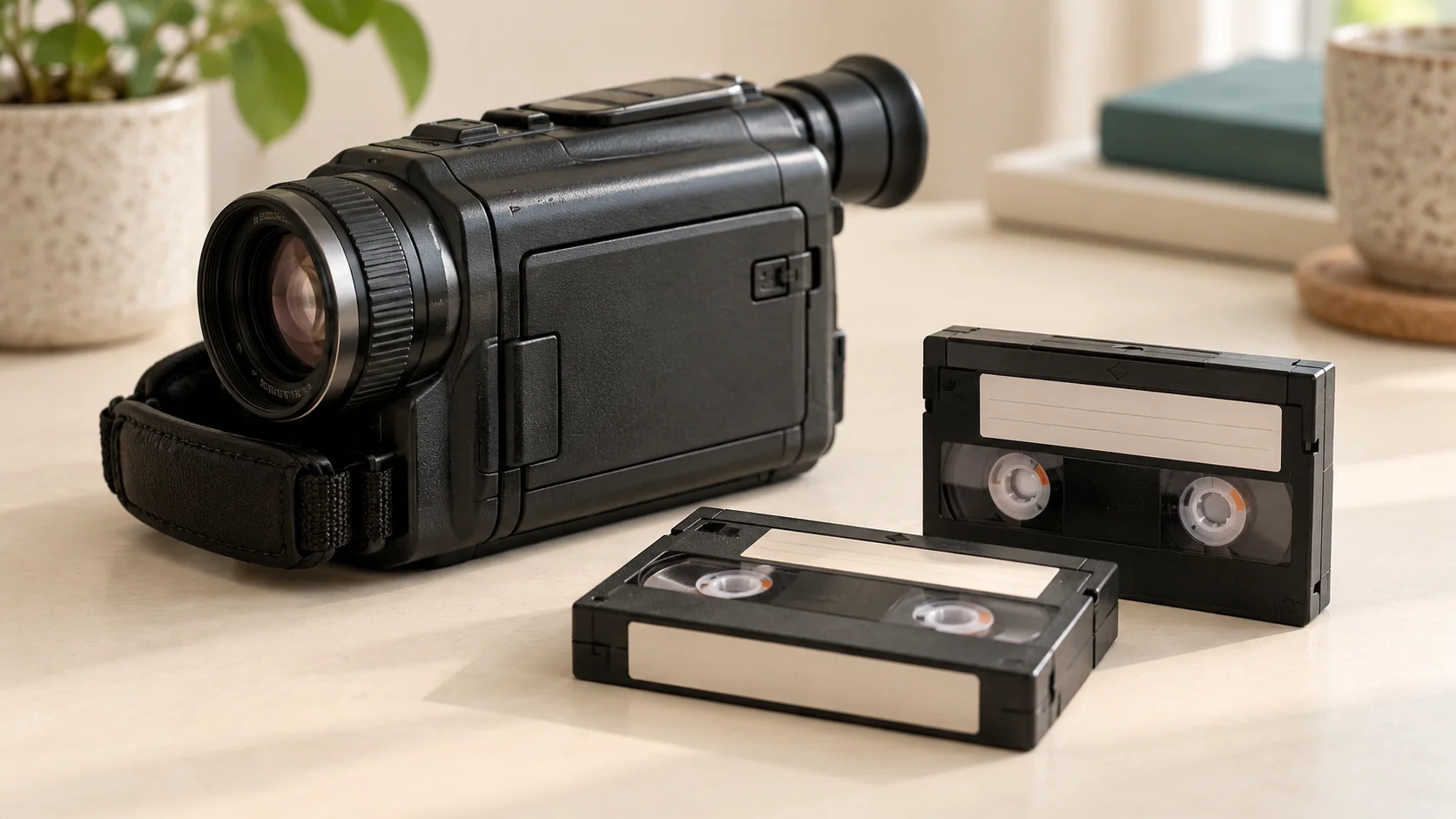
- Read the cassette and sleeve labels. Note VHS, VHS-C or another format rather than relying on the brand.
- Record how many tapes there are and any handwritten event titles or dates.
- Note whether the box was dry, damp, dusty or exposed to a known roof leak.
- Look at the outside of the cassette for cracks, distortion, visible debris or suspicious growth, without opening it or touching the tape.
- Take clear photographs of the labels and any visible concerns for your enquiry.
If there is suspected mould, dirt or debris, leave playback to a specialist assessment. National Archives guidance specifically warns against playing visibly dirty tapes without preservation advice. Our guide to suspect mould on old tapes explains that separate concern.
Should I play a cold tape straight away?
No. A cold tape brought into a warmer room needs care before playback. The Canadian Conservation Institute explains that moisture can condense when tapes move from cooler storage into the playback environment.
Do not put a cold cassette straight into a machine, use a radiator or hairdryer to speed warming, or assume that a damp tape only needs a quick warm-up. Tell the service about the move from storage and any moisture exposure so handling can be discussed first.
Where should I keep the tapes while arranging conversion?
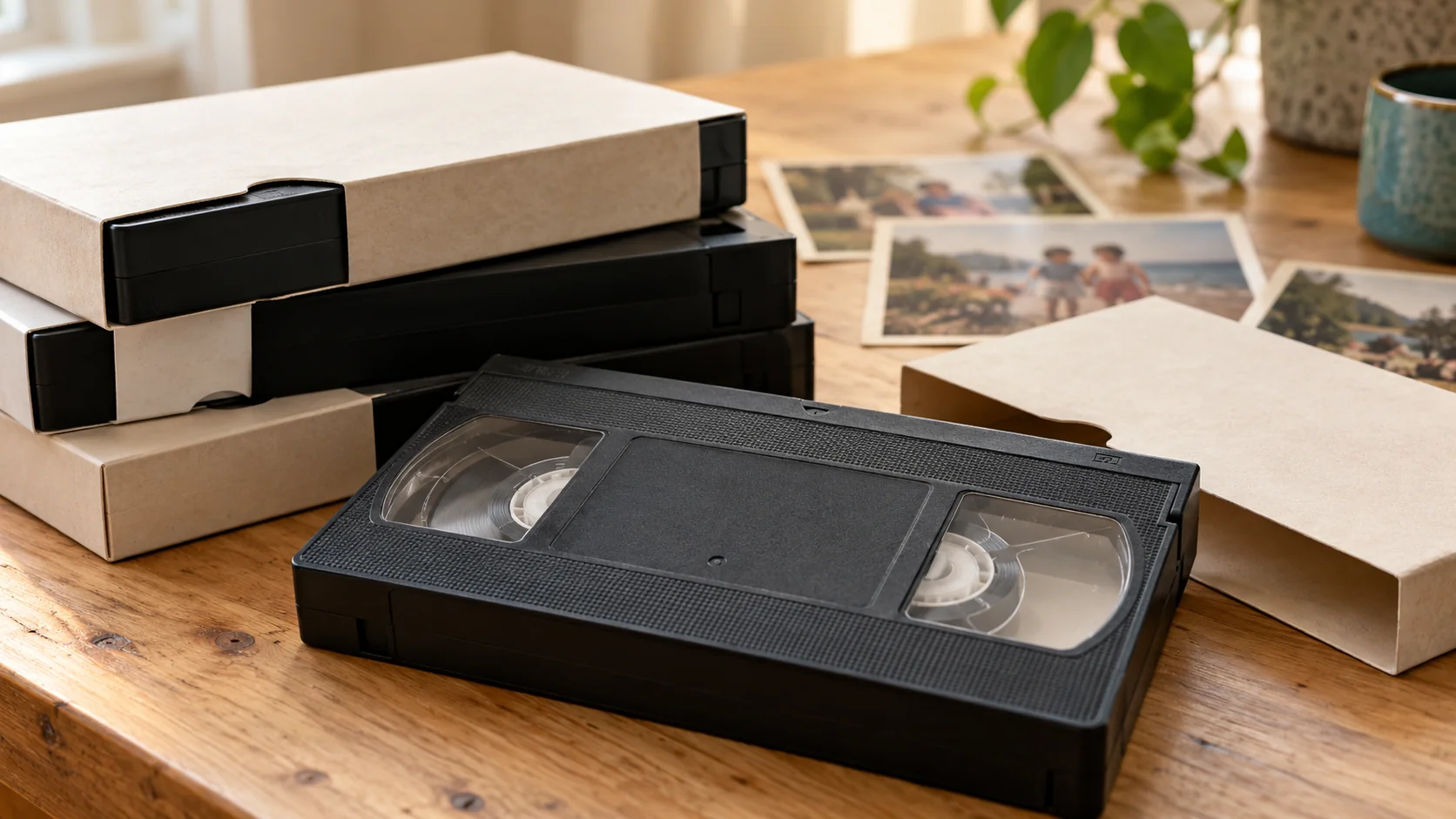
For apparently dry, undamaged tapes, choose a clean indoor location with stable conditions, away from sunlight and water risks. Keep them in their cases, upright like books and off the floor. Do not return them to the loft simply because they are now in a different box.
Keep original labels and sleeves associated with each cassette. You do not need to guess the running time or repeatedly rewind a tape to prepare an enquiry.
Can Rewind Digital help with the next step?
Our VHS-to-digital service is based in Tadcaster, with local drop-off and return of originals by appointment. Explain the storage history and condition before arranging a handover. Standard conversion is not a promise of cleaning, repair, restoration or specialist recovery; any such needs require separate confirmation.
See current prices, then build an estimate and send a request. Format, condition, availability and the final quote are agreed before work. The website form does not take payment online.