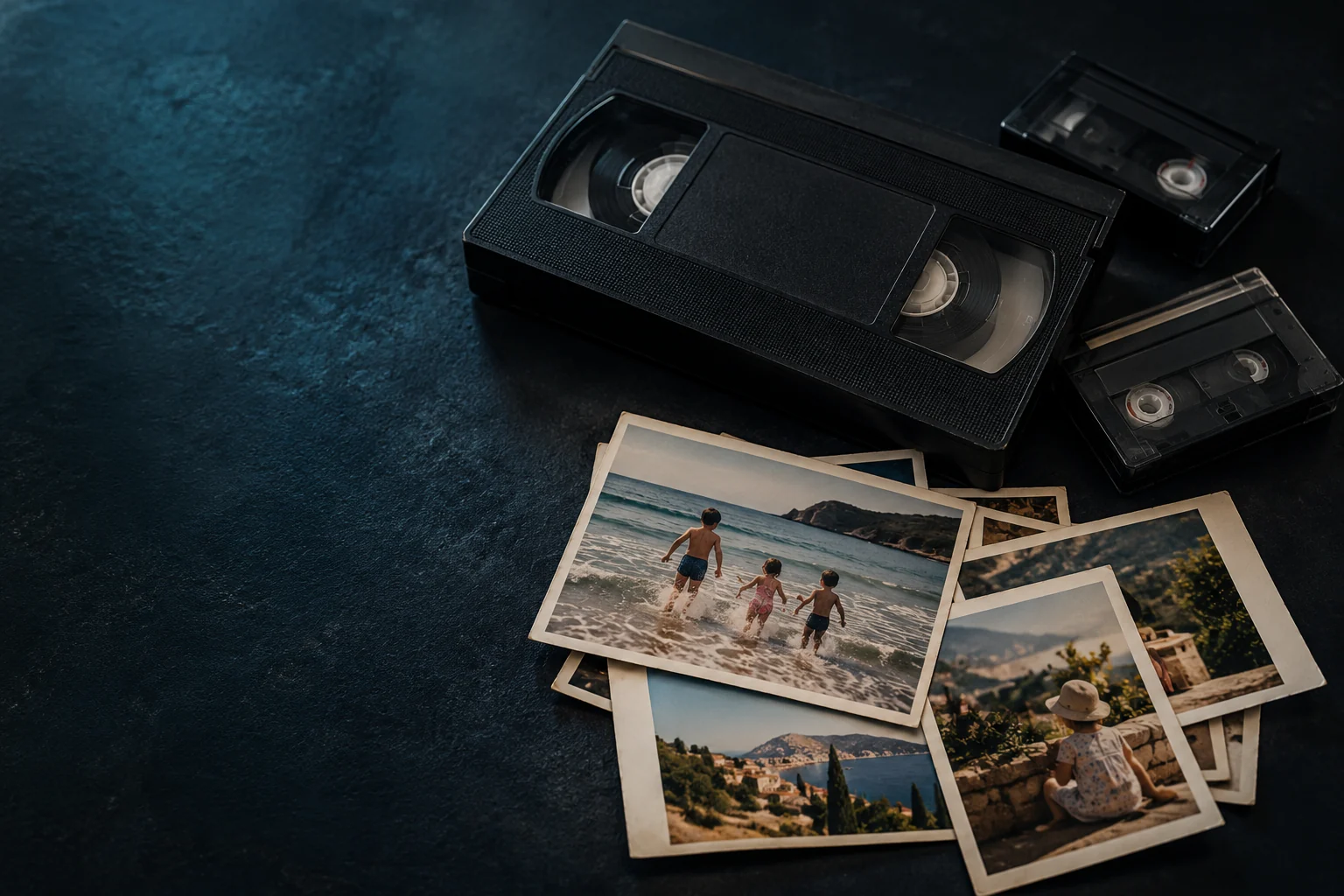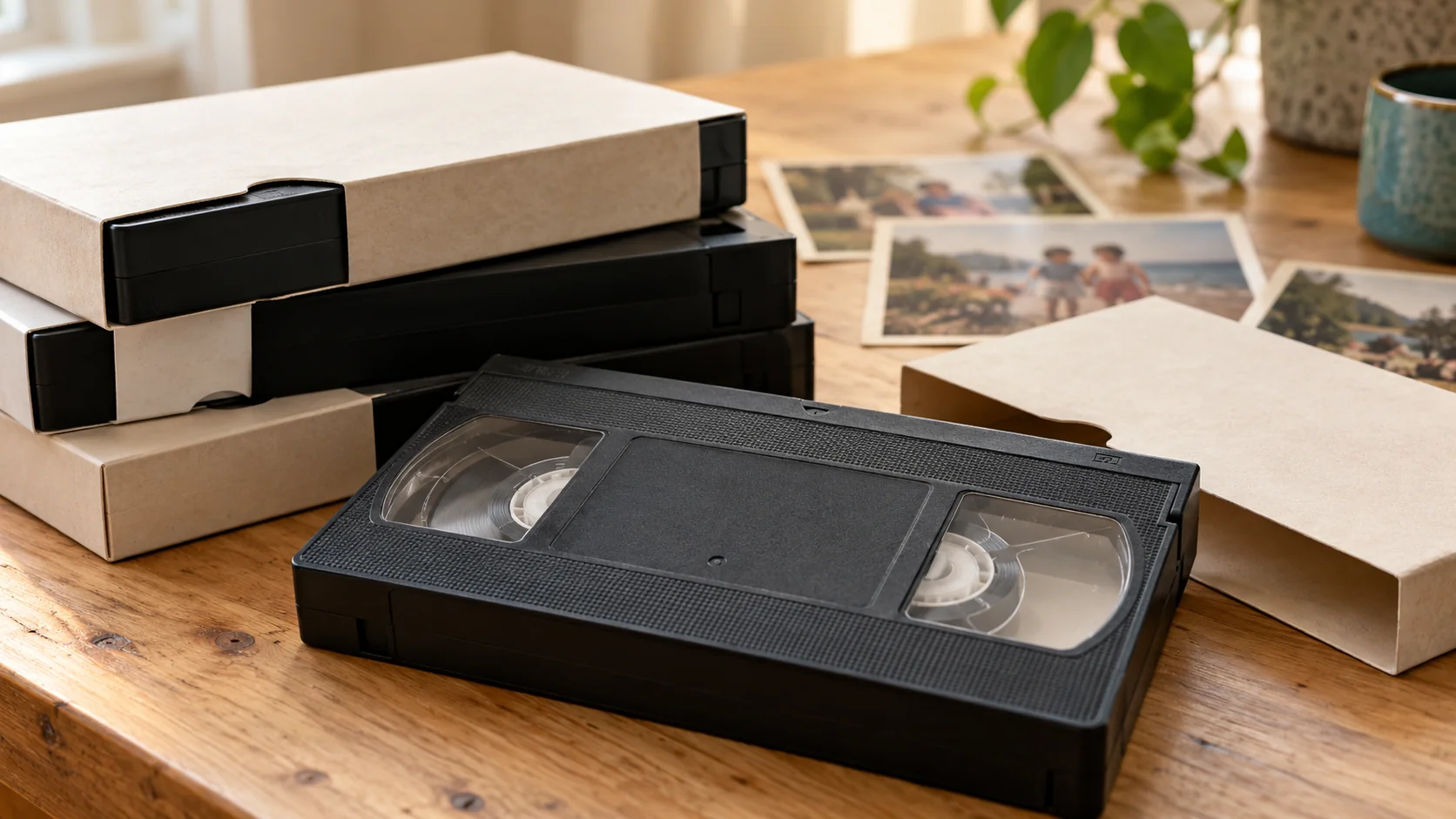
Use a short identifier for each tape, keep every original label intact and record what you know in a separate list. A simple inventory such as T01, T02 and T03 helps match each cassette to its notes and later digital file without turning guesses into facts.
What should I put in the tape inventory?
Create one row for each cassette with:
- your identifier, such as T01
- the format printed on it: VHS, VHS-C, MiniDV or Hi8
- every date, name or event already written on the label
- whether the information is certain or only a guess
- any condition concern, such as a cracked shell, loose part, dirt or suspected mould
- the order in which you would like tapes prioritised
Photographing both sides of each cassette can preserve handwriting and help if a loose sleeve becomes separated. Do not assume a printed tape length, brand or handwritten date proves what was recorded.
If a cassette has no useful wording, record it as “unknown” rather than inventing a title. A note such as “T07 — MiniDV — possibly school play, date unknown” is clear and honest.
Where should I place the identifier?
Keep the original cassette label and case together. If a case or sleeve is already labelled, add the identifier there or attach it to a separate paper note kept with that tape. Avoid placing new stickers over existing writing, cassette openings or moving parts.
Do not peel off an old label to make the collection look neater. If you are unsure where a new mark can safely go, leave the cassette unchanged and rely on the inventory plus photographs.
The US National Archives advises handling the outside of a cassette rather than touching the tape surface. It also recommends storing tapes in boxes, vertically on edge, and away from strong magnetic fields.
Should I rewind or test every tape first?
No. Labelling and inventorying do not require you to play each cassette. Every playback can put wear on an original, and an unsuitable or poorly maintained machine may cause damage.
Do not test a tape that looks dusty, dirty, damaged or mouldy. Note the condition and mention it before arranging a transfer. Repairs and specialist recovery are not part of Rewind Digital's confirmed standard service and would need separate discussion.
Will my labels become the digital filenames?
Not automatically. Your identifiers make it easier to discuss the collection, but filename and folder arrangements should be agreed before work begins. The Library of Congress recommends descriptive filenames and brief information about a digital video collection, so tell us if names, dates or a particular order matter to you.
Keep the inventory after conversion. It can link the original tapes to the delivered files and help family members add names or dates later without altering the originals.
How do I request a transfer?
Use the tape identification guide if you are still separating VHS-C, MiniDV and Hi8, then check the current prices.
Build an estimate and send your request with the tape count, formats and any important deadline. Rewind Digital supports VHS, VHS-C, MiniDV and Hi8 including Sony Hi8. Format, condition, availability and the final quote are confirmed before work starts.
Local drop-off and collection are by appointment in Tadcaster, and your originals are returned. Allow up to one week from your agreed drop-off; the completion date is confirmed with your quote.