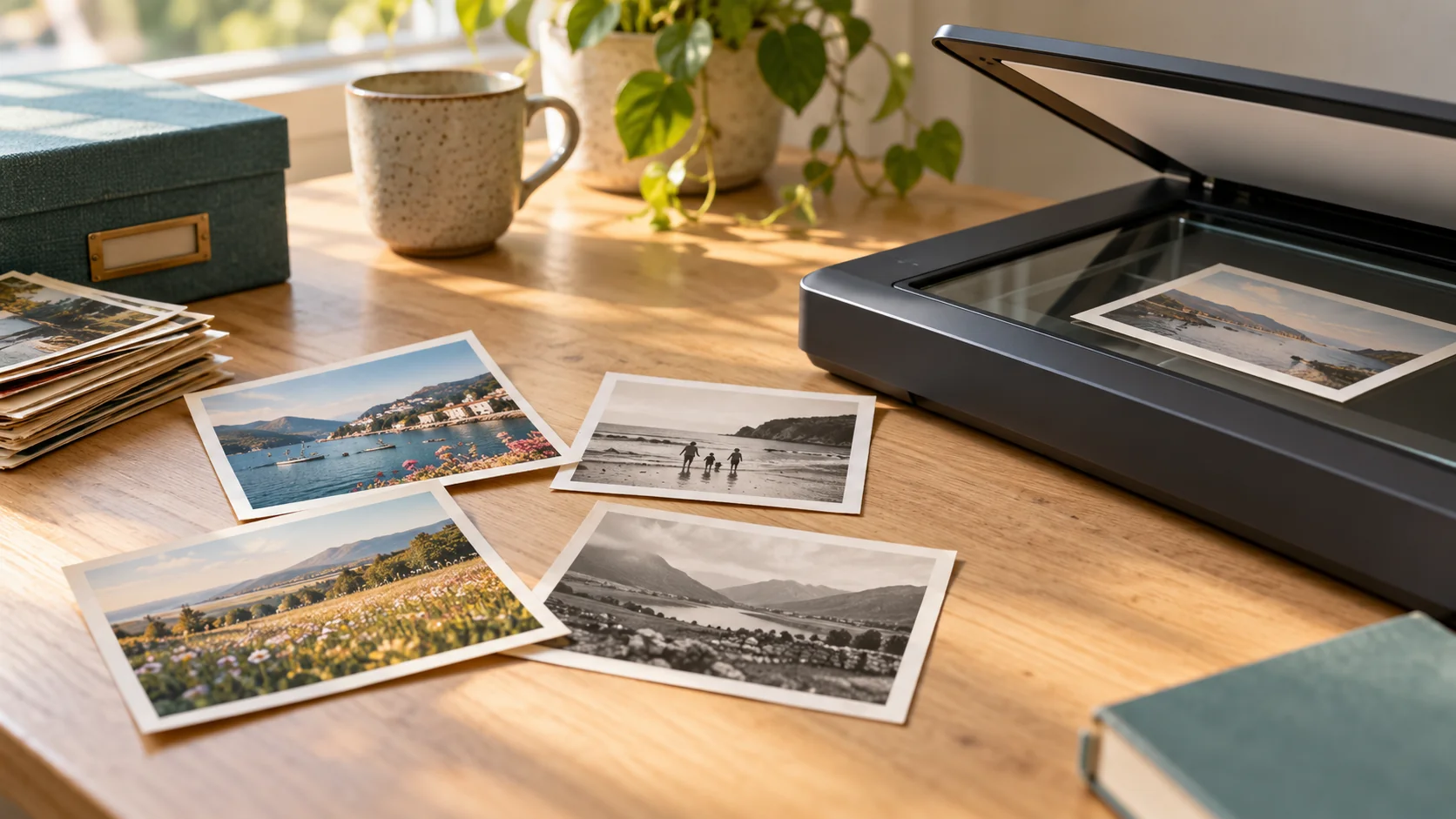
Prepare loose photo prints for scanning by counting them, keeping useful groups together and adding separate batch notes. Leave fragile or stuck photographs as they are and ask for advice before bringing them in. Photo scanning is easier to plan when your prints arrive in sensible groups. You do not need to reorganise an entire family archive before making an enquiry. Start with the photographs you most want to share, then decide how you would like the digital copies grouped.
Choose a manageable first batch
A single holiday, one person's childhood or a small selection for an anniversary makes a useful starting point. Count the loose prints in that batch and note their approximate sizes.
The standard photo option in our order builder is for loose printed photographs. Albums, slides, negatives, very large prints and restoration need a separate discussion. Mention these before arranging a drop-off rather than assume they are included in the same service.
If your count is an estimate, say so. We agree the inventory and quote before starting. When published rates are available, the calculator shows how your photo count contributes to the order total.
Keep the order that matters to you
You might prefer photographs arranged by year, event or family member. Keep each group together and add a separate note describing it. A simple label such as “Summer holiday 1994” is enough to explain the intended grouping.
If you are unsure of dates, avoid guessing. A broader label such as “Grandparents — dates unknown” is more useful than a date that might later be mistaken for a fact.
Tell us if existing handwritten information on the reverse matters to you. Scanning the front does not automatically include a second image of the back. We can discuss what you need before confirming the work.
Leave delicate photographs as they are
Do not pull stuck photographs from an album just to turn them into loose prints. Do not add new stickers, glue or tape to the image surface. If a print is fragile, damaged, curled or attached to something, describe the condition first.
Keep the originals together in a suitable clean container for the journey, with your batch notes separate from the image surfaces. Tell us about suspected mould or water damage before bringing anything in.
These checks help establish the right approach. Standard scanning makes a digital copy; it does not automatically repair a tear, recreate a missing part of an image or remove every mark. Ask separately if you want restoration discussed.
Think about how you want to use the files
Sharing photographs with family, displaying them on screen and making new prints can involve different requirements. Tell us what you have in mind so we can confirm the scanning and delivery details.
Digital download is the simplest starting choice. If you prefer USB, select it in the form. Once you receive the files, check that the groups are complete and keep an additional copy somewhere separate from the first.
Arrange your local appointment
For Rewind Digital in Tadcaster, submit your photo scanning request with the count, sizes and any special requirements. Drop-off and collection are arranged directly by appointment.
If you are coming from Wetherby, Boston Spa, York or a nearby village, wait for the time and meeting details before travelling. Your originals are returned by agreed collection.
You can read more about photo scanning, compare the published prices or review how the handover works before starting.