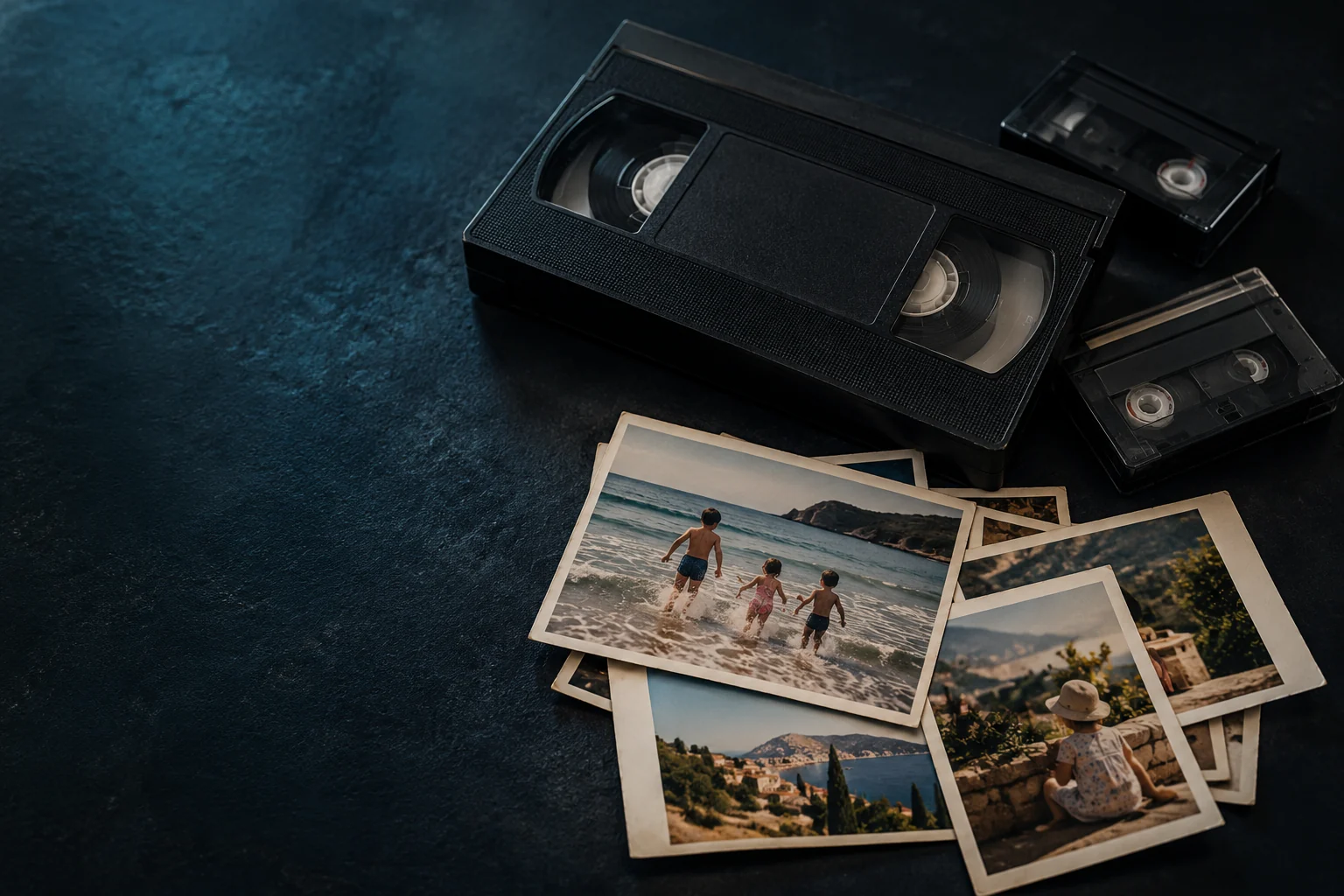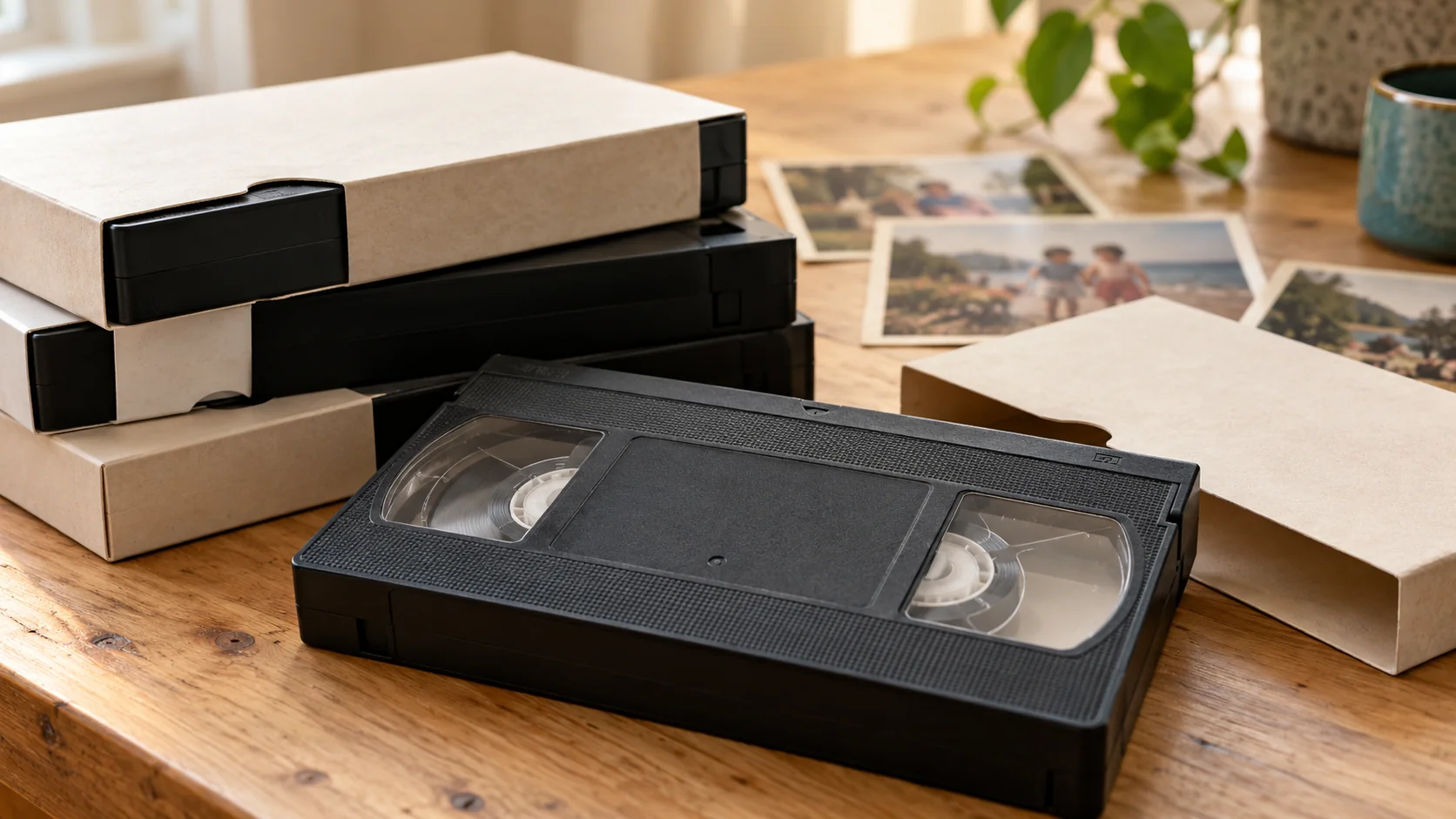
Before booking a tape conversion, confirm that the service can handle your exact recordings, what the final price includes, how you will receive the files and when your originals will be returned. Put any special requirements in the enquiry before agreeing to work. A clear conversation matters more than assuming every “tape-to-digital” offer means the same thing.
Can you transfer this exact tape format?
List the format names and quantities printed on your cassettes, not just the brand. Add the camcorder model if you know it and mention any recording-standard or speed markings.
Rewind Digital’s confirmed formats are VHS, VHS-C (mini VHS), MiniDV and Hi8, including Sony Hi8. Video8, Digital8 and HDV require separate confirmation. If you are unsure, our tape identification guide is a starting point—not a reason to guess.
What is included in the final quote?
Ask whether the charge is per tape or recording hour, whether recording length or condition affects the quote, and whether your preferred delivery medium costs extra. Confirm what happens if a tape is blank or cannot be transferred; do not assume a policy.
Rewind Digital’s current prices show the supported tape rates, optional USB and larger-order discount. The website saves an estimate and order request; it does not take payment online. Format, recording length, condition, availability and the final quote are checked before work starts.
What files will I receive, and will they play on my device?
Tell the service whether you want to watch on a computer, phone or television. Ask about the supplied file format, how files will be named and how to test playback.
The US National Archives distinguishes easy-to-watch access copies from archival preservation copies. They serve different purposes, so do not assume that a convenient viewing file also meets a specialist archive’s requirements. If you need a preservation master, particular technical specifications or editing, discuss that separately rather than assuming it is included.
Rewind Digital offers download or an optional USB. A USB is a delivery choice, not a guarantee that every television can play its contents.
How will my originals be handled?
Ask how tapes are identified, stored, handled and returned, and what arrangements apply if something goes wrong. The Canadian Conservation Institute recommends discussing handling, insurance, equipment and delivery with a transfer provider.
Mention visible mould, a cracked cassette, water damage or previous playback trouble before handover. Do not test-play a suspect tape to answer an enquiry. Repair, restoration and specialist recovery are not confirmed standard Rewind Digital services.
For private recordings, also ask who can access the files, how download access works and what retention or deletion arrangements apply. These details should be agreed, not guessed.
Can you meet my deadline?
Explain the occasion and the date you need the files, allowing time to check them. Rewind Digital advises allowing up to one week from the agreed drop-off, with the completion date confirmed in the quote. Mention birthdays, anniversaries and other deadlines when you first enquire.
Handover and return of originals are by appointment in Tadcaster. Do not arrive without an agreed appointment.
What should I send in my first enquiry?
Include the tape counts and formats, any condition concerns, preferred delivery option, intended viewing device and deadline. You can then build an estimate and send an order request.
After delivery, check the files and make backups. National Archives guidance recommends a second copy rather than relying on a single delivery device.