You do not need to rewind a VHS tape simply to ask about having it digitised. If you are unsure about its condition or your old player's reliability, leave it in its case and describe what you know. Rewinding is not a useful test of whether the recording can be recovered.
Is rewinding always good for an old VHS tape?
No. The Canadian Conservation Institute says that a properly wound VHS tape kept in suitable conditions, with no visible winding problems, is best left alone rather than rewound periodically. It also warns that rewinding with unsuitable equipment can cause harm.
That is not a rule that tapes must never be rewound. Their condition, storage history and the playback equipment matter. A problem with the tape winding needs assessment, not an automatic fast-forward-and-rewind routine.
For a household preparing a transfer enquiry, the practical conclusion is simple: do not run every cassette merely to make the box look ready.
Should I play each tape to find out what is on it?
Not just for the sake of completing a list. The US National Archives recommends limiting playback of originals and using appropriate, well-maintained equipment. An old player being able to switch on does not establish that it is suitable for your irreplaceable recording.
If you do not know the contents, write “unknown” alongside the cassette's existing label. Tell us which recordings you particularly hope to find, without guessing that an unlabelled tape is blank.
Our tape-labelling guide explains how to keep your notes matched to the originals.
What if the tape looks loose, dirty or damaged?
Do not try to tighten it by turning the reels or opening the shell. If there is visible dirt, debris or suspected mould, seek preservation advice before playback. The National Archives specifically cautions against playing dirty tapes without specialist guidance.
Note a cracked case, a previous jam or unusual playback behaviour in your enquiry. A description or clear photograph of the outside can help explain the issue, but cannot establish that a tape is safe or recoverable.
Repairs and specialist recovery require separate confirmation; standard conversion is not a promise to fix damaged media.
What should I prepare instead?
- Count the cassettes and copy their format markings and existing titles.
- Note any known recording dates, contents or previous problems.
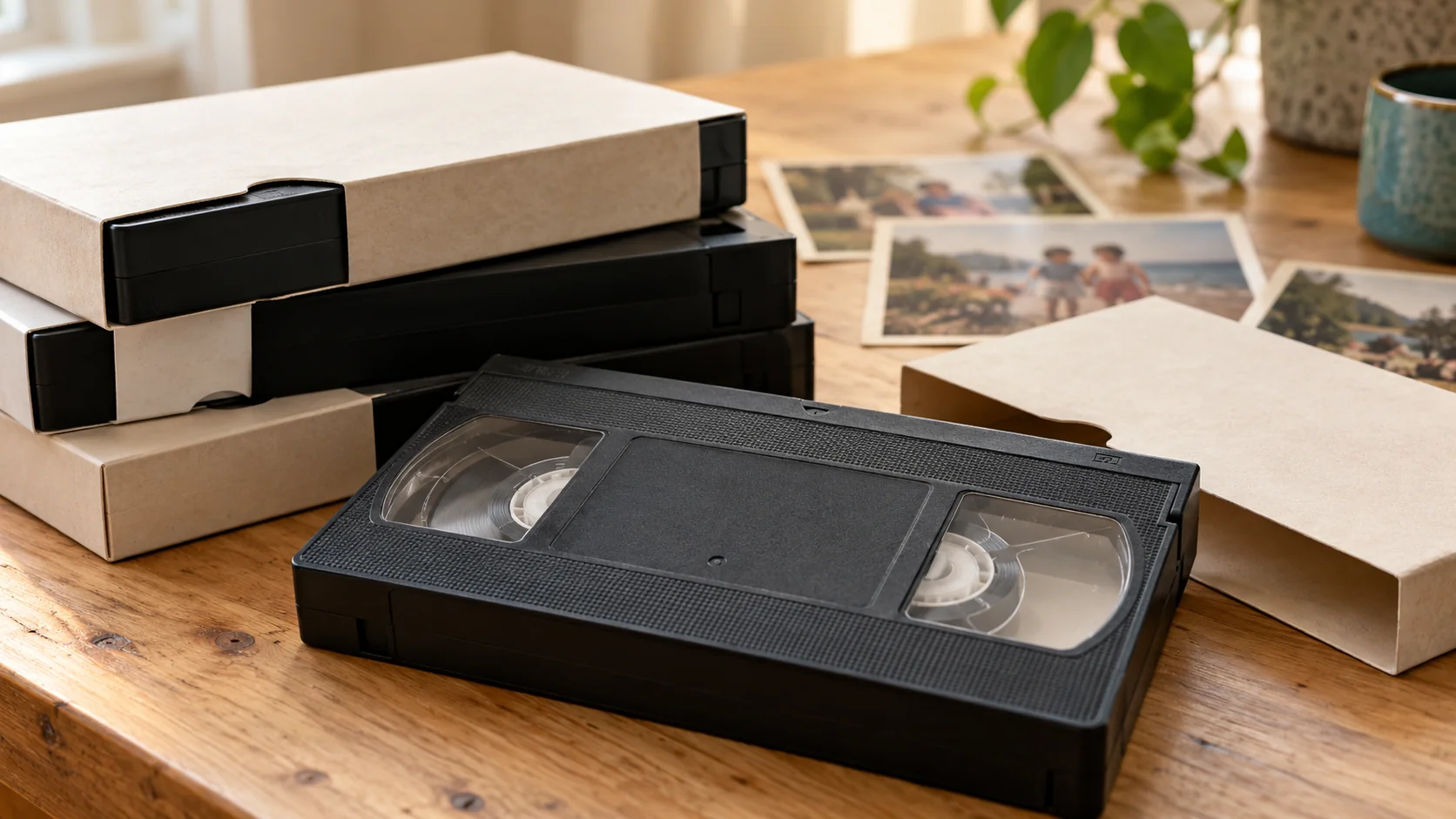
- Keep each cassette with its matching case and your inventory.
- Leave unknown running times as unknown rather than playing everything to measure them.
- Mention any deadline before agreeing a drop-off appointment.
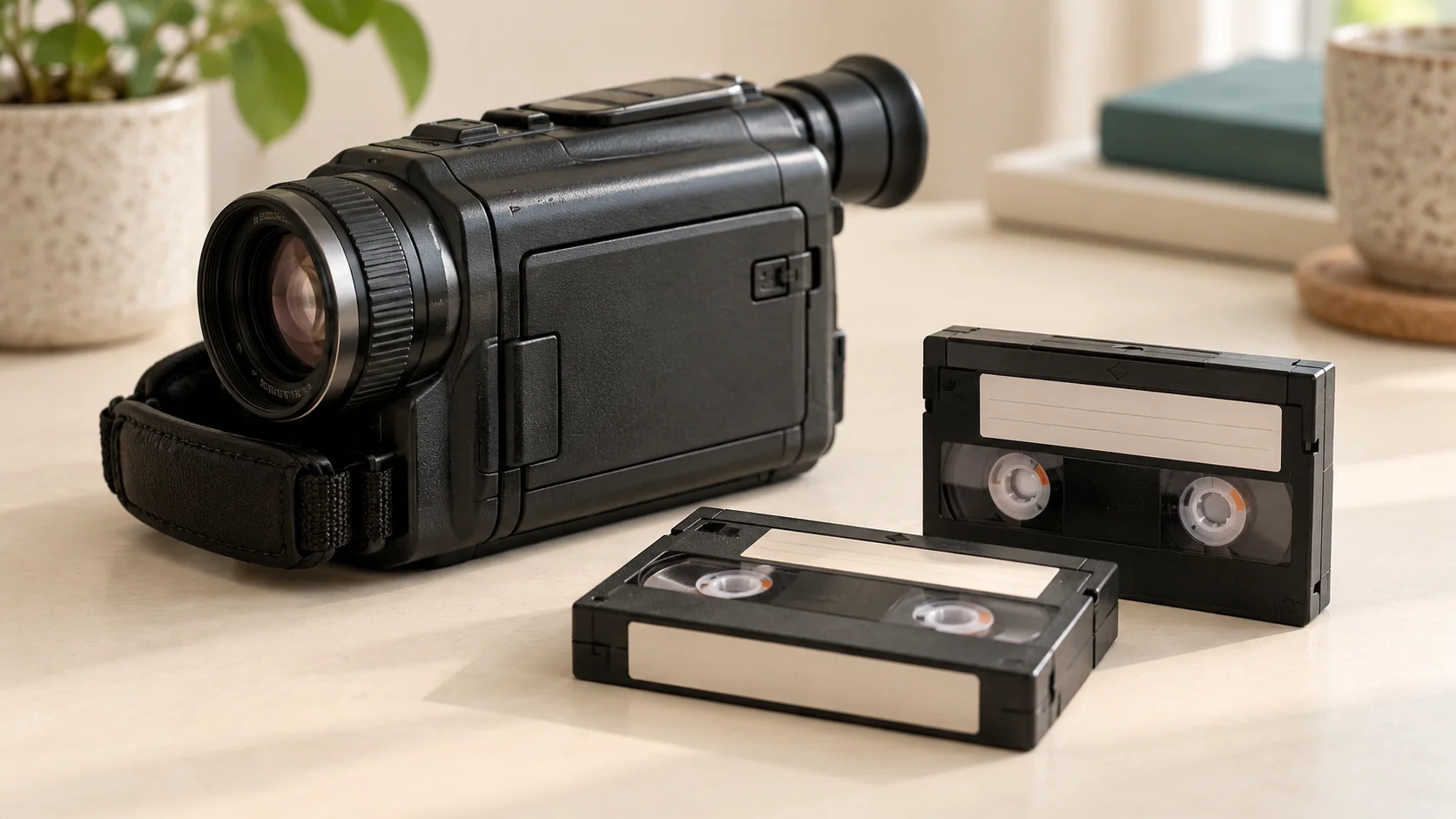
The same enquiry-first approach is useful if your box includes VHS-C, MiniDV or Hi8 tapes: tell us the exact markings rather than assuming one player or winding procedure suits them all.
How do I arrange a transfer in Tadcaster?
See our VHS-to-digital service and current prices, then build an estimate and send a request. Format, condition, availability and the final quote are agreed before work; the form does not take online payment.
Local drop-off and return of originals are by appointment, with download or optional USB delivery. Allow up to one week from the agreed drop-off; we confirm the completion date with your quote.