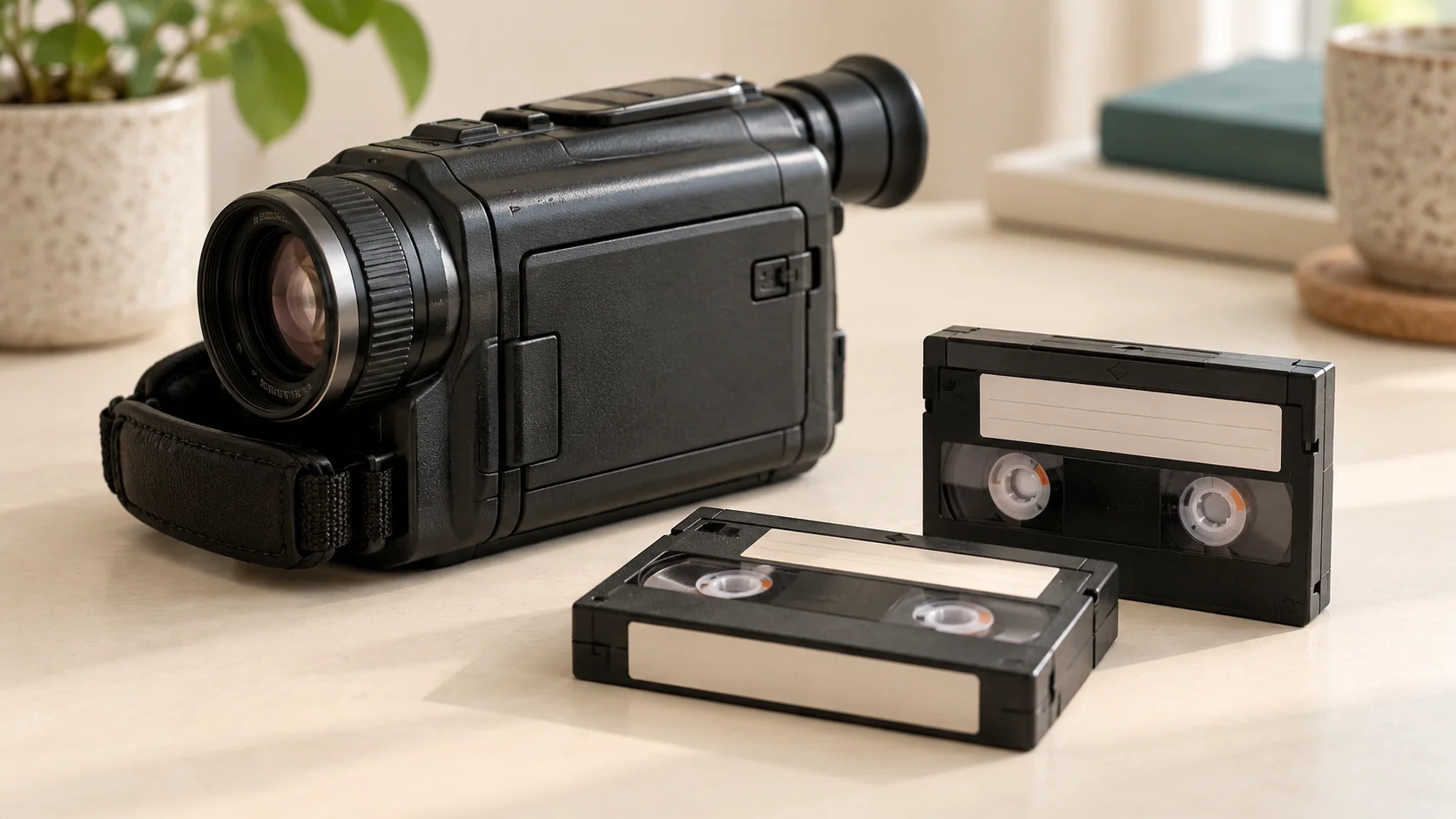
Do not pull a stuck cassette or prise open the camcorder’s tape mechanism. Protecting the recording matters more than getting the door open quickly. Find the exact camera model and its manufacturer’s instructions; if normal, model-appropriate troubleshooting does not resolve the problem, seek qualified repair or tape-preservation advice before attempting a digital transfer.
Why should I avoid forcing the tape out?
Sony warns that forcing a camcorder’s eject mechanism open or closed can cause damage. That includes a cassette which is only partly ejected: its visible position is not permission to pull it free.
Avoid inserting tools into the mechanism, opening the cassette shell or trying to drag exposed tape back into place. The US National Archives advises handling the outside of a cassette rather than its recording surface, and says tape repair or splicing should only be attempted by appropriately trained people.
A jam does not tell you whether the recording has survived. Equally, it does not prove the contents are lost.
Is there a safe reset I can try?
There is no single reset sequence suitable for every old camcorder. Sony’s troubleshooting refers users to their model’s operating guide and describes different controls depending on the camera.
First identify the model from the camera’s external label, without dismantling it. Use the manufacturer’s support page to find the matching instructions and check that any troubleshooting applies to that model.
Do not substitute a random charger, copy a procedure for an unrelated camera or keep cycling the mechanism when tape is visibly caught. If the instructions are unclear or the cassette remains trapped, stop and seek advice. Sony notes that unresolved eject problems may require servicing.
What information should I record before asking for help?
A short factual description is more useful than guessing the cause:
- Camera make and full model number.
- Cassette format, if known: Hi8, MiniDV or VHS-C, for example.
- Whether the door is closed, partly open or fully open.
- Any error code shown on the display.
- Whether tape is visibly loose, creased or caught.
- What happened immediately before the problem, and what you have already tried.
Photograph the outside of the camera and the cassette’s visible position without moving the mechanism. Do not run it again just to demonstrate the fault.
Can I book a digital transfer while the cassette is stuck?
Tell the transfer provider about the trapped tape before arranging a handover. Releasing a cassette, repairing a camera and converting a playable recording are different jobs.
Rewind Digital’s confirmed Hi8-to-digital service includes Sony Hi8; supported transfers also include VHS, VHS-C and MiniDV. **Camcorder repair and stuck-tape extraction are not confirmed standard services.** Any specialist work or damaged-media handling needs separate confirmation, with no guarantee of recovery.
Once a tape can be safely assessed, format, condition, availability and the final quote are agreed before work. Check current prices and request an estimate, describing the jam clearly. The form saves a request, not an online payment. Local drop-off and return of originals are by appointment in Tadcaster.