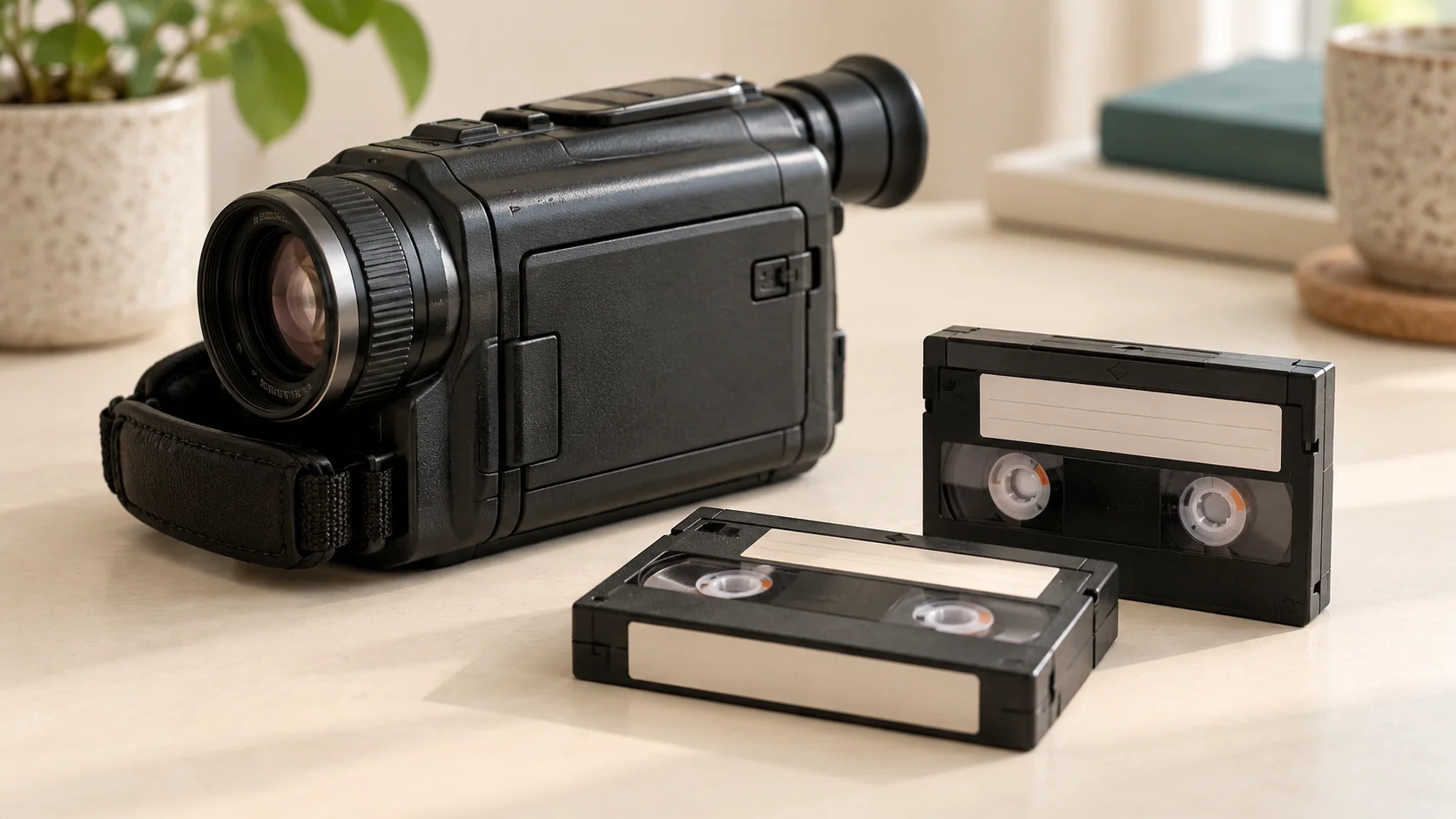
No—do not try to play or rewind a treasured tape while the camcorder is showing a moisture warning. Follow the instructions for the exact camera model, including its cassette-removal procedure. If the tape will not eject normally, stop rather than forcing it out.
Why can a camcorder show a condensation warning?
Moving a cold camcorder into a warm room can allow moisture to form inside it, on the tape or on the lens. Sony’s DSR-PD175P/PD177P manual explains that a tape can stick to the head drum and suffer damage in these conditions.
That makes the warning a reason to pause, not an obstacle to bypass so you can quickly check a family recording. Note the exact message or error code: do not assume every flashing symbol means condensation.
Do I just leave the camera for an hour?
Check your model’s manual rather than treating an hour as a universal guarantee.
For example, Sony’s DSR-PD175P/PD177P instructions say to eject the cassette, switch off and leave the cassette lid open for about an hour. They also specify warning checks before reuse. This is a model-specific example, not an instruction for every Hi8 or MiniDV camera.
If your camera’s warning persists after its prescribed procedure, seek manufacturer support or an appropriate repair specialist. Do not keep inserting irreplaceable tapes to see whether it has improved.
What if the cassette is still inside?
Use only the normal eject procedure described for your camera. Do not pull exposed tape or dismantle the mechanism to retrieve it.
Our stuck-camcorder-tape guide covers what to record before seeking help. The US National Archives advises handling the outside of a cassette rather than touching the tape, and consulting a preservation specialist instead of attempting untrained tape repairs.
A warning disappearing does not establish the condition of a cassette that has been wet, contaminated or damaged. Visible dirt, debris or suspected mould needs specialist advice before playback.
What information helps with a transfer enquiry?
You can prepare an enquiry without running the tape:
- Copy the camera’s full model number and the cassette’s format markings.
- Photograph or write down the warning exactly.
- Say whether the cassette is out of the camera or still inside.
- Describe any known move from cold storage, damp exposure, jam or previous playback problem.
- List the recordings you hope to preserve, leaving unknown contents or running times as unknown.
Keep equipment troubleshooting separate from the transfer request. Camera repair, cassette extraction and specialist recovery are not automatically included in standard digitisation.
Can I arrange conversion without fixing my own camcorder?
See our Hi8-to-digital service; VHS, VHS-C and MiniDV conversion are also available. Format and condition need checking before we confirm the work.
Rewind Digital is based in Tadcaster, with local drop-off and return of originals by appointment and download or optional USB delivery. See current prices, then build an estimate and send a request. The final quote is agreed before work starts; the form does not take online payment. Mention any deadline before booking.